Field Notes: Community as Textbook — 01. A visit to EPIC-SS, Padur. 17 August 2026.
When we moved to Chennai, we wanted two things for our children as an unschooling family. First, to expand their social circle — more inspiration, more play, more joy, more friendships. Second, to use the city as a classroom, so that learning and living were not two separate activities. Because why do we learn, after all? To make a good life for ourselves and for others. (Not for jobs. Come on, you can’t be serious.) We have been going around the city in our own way, exploring events as they come, and being part of the Chennai homeschooling community has made an enormous difference to what we hear about and what turns out to be worth exploring together. One such trip was to EPIC-SS in Padur.
I must say, I was reluctant to go. Hear me out. We go for so many visits, watch so many videos, listen to so many inspiring talks about leading a sustainable life — and then what happens? That is the question that keeps me up at night, and it is the reason Inner Companion exists at all. I did not want to visit another beautiful space, feel inspired, and come home to a life that was almost exactly the same as before. I went anyway, because I had promised the family we would explore together. And boy, am I glad I did.
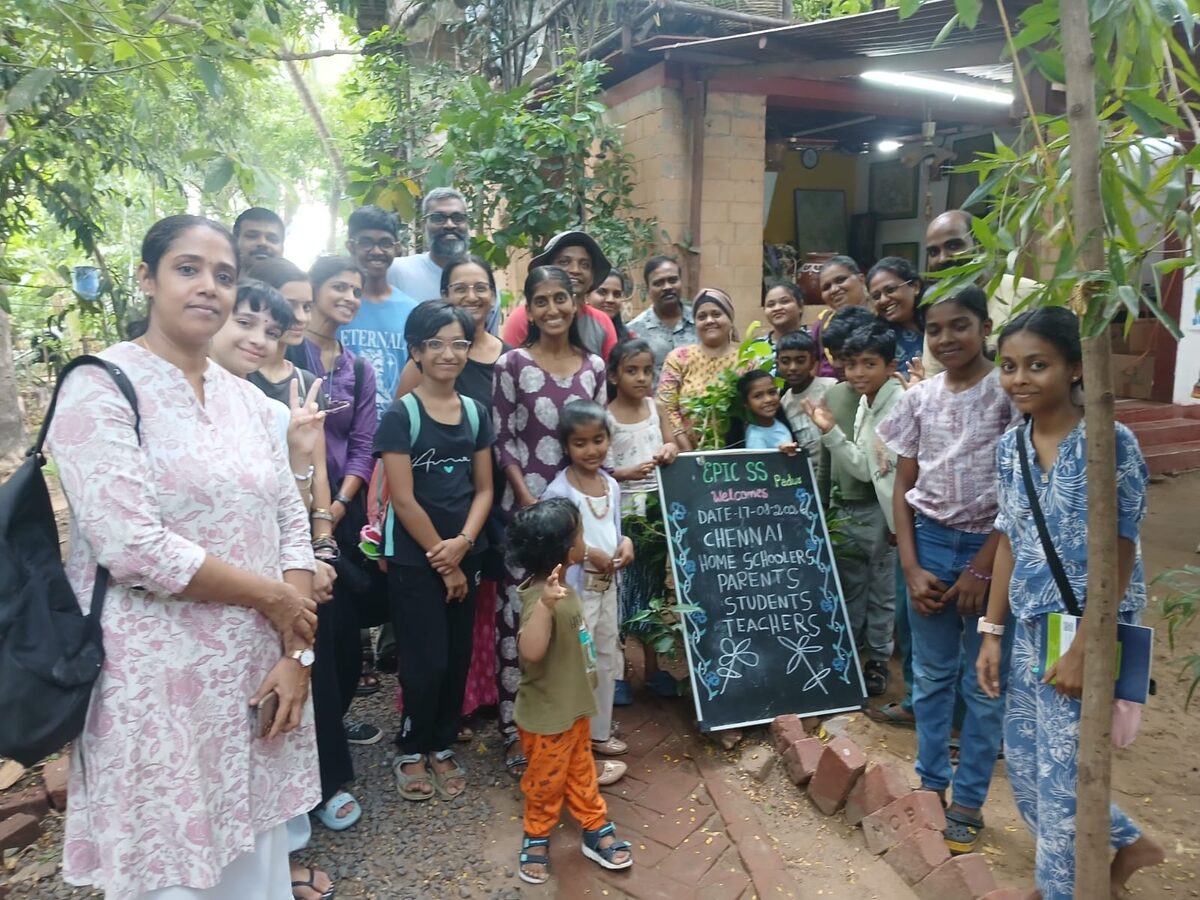
Before you read further, you should know why I am writing this. It is not to praise what EPIC does, and it is not to nudge you into visiting — if that happens, it is a byproduct. I am writing to confront the hypocrite who lives in me, and who I suspect is a city-bred affliction many of us carry. The disease is excuses, complaints and inertia, which between them explain most of what is falling apart around us. The first step to getting better is to name the shortcoming for what it is. As you read my reflection and my critique of myself, it might offer you a way of confronting the shadows you carry — or of shining the brightest light you carry.
The visit
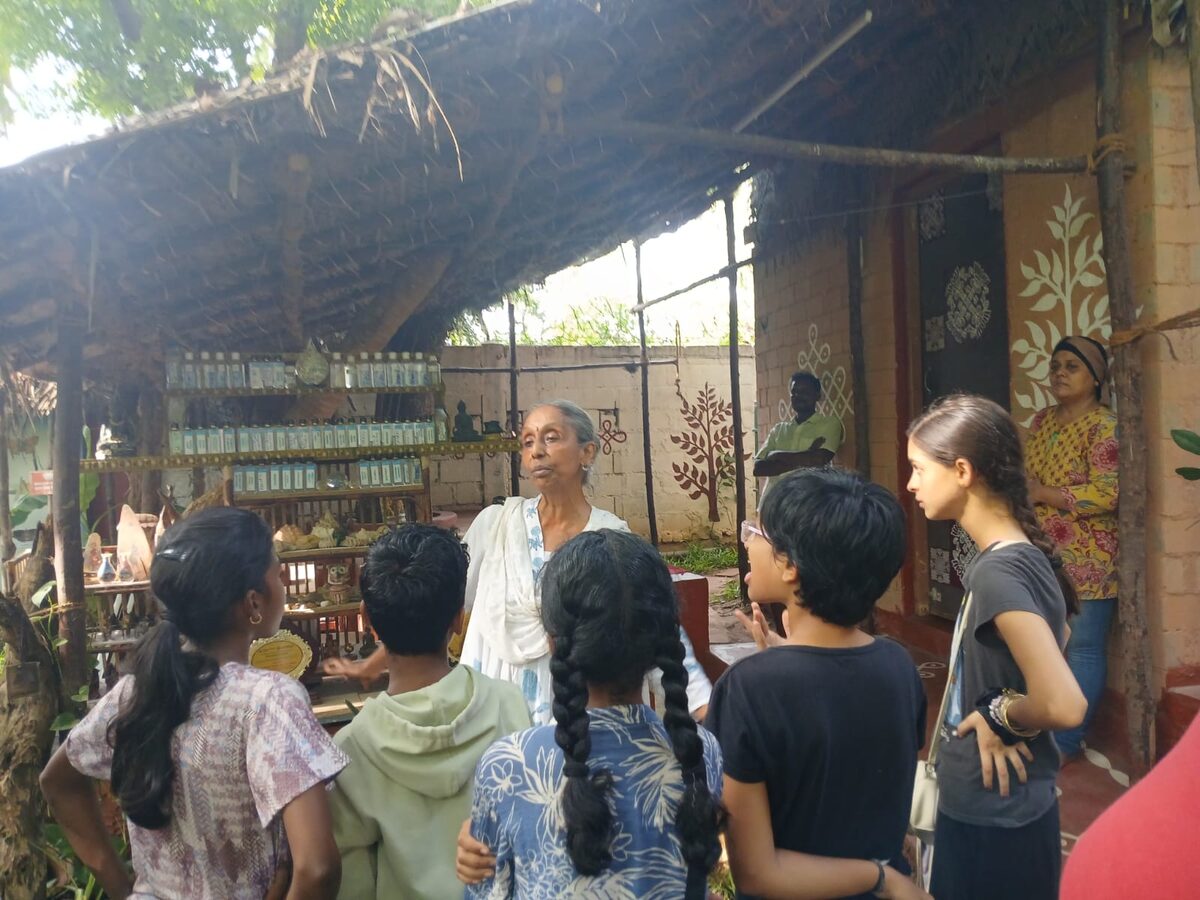
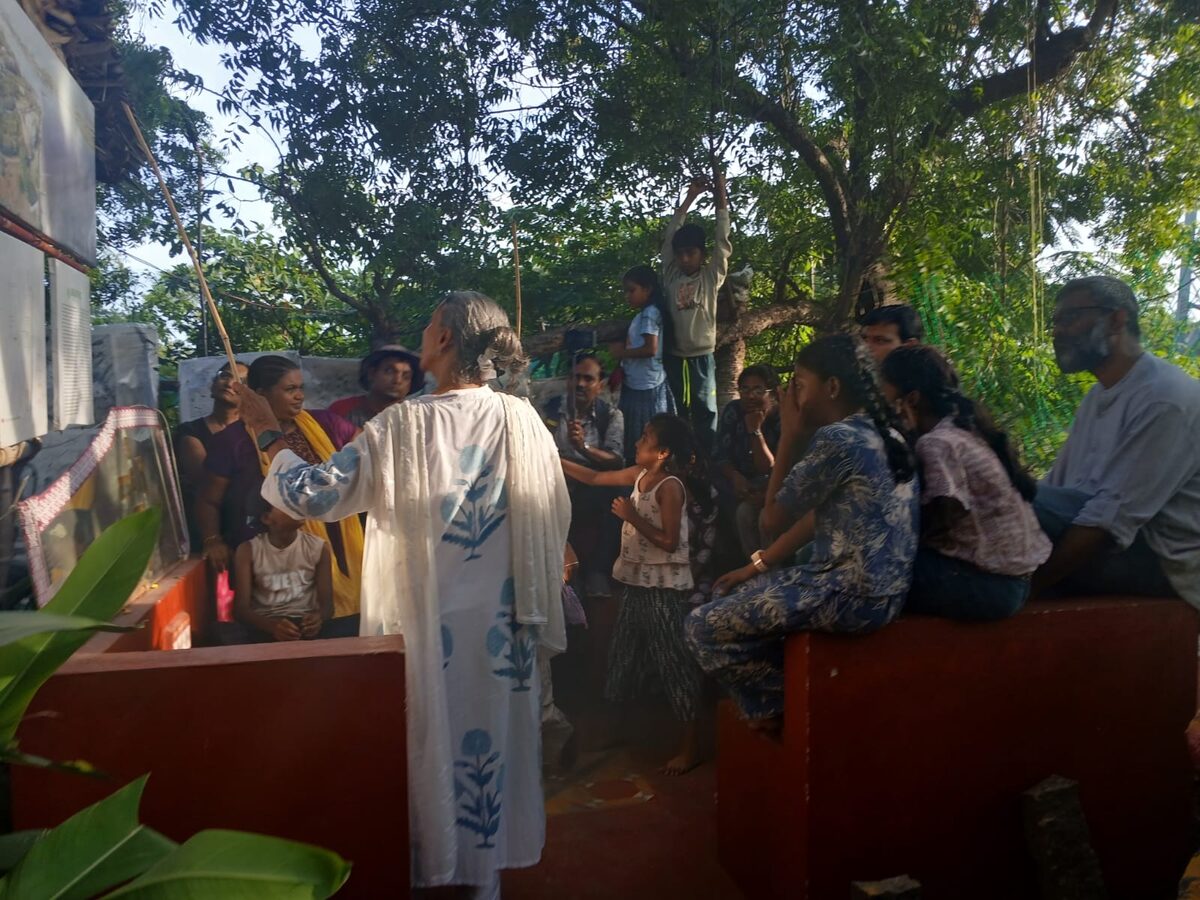
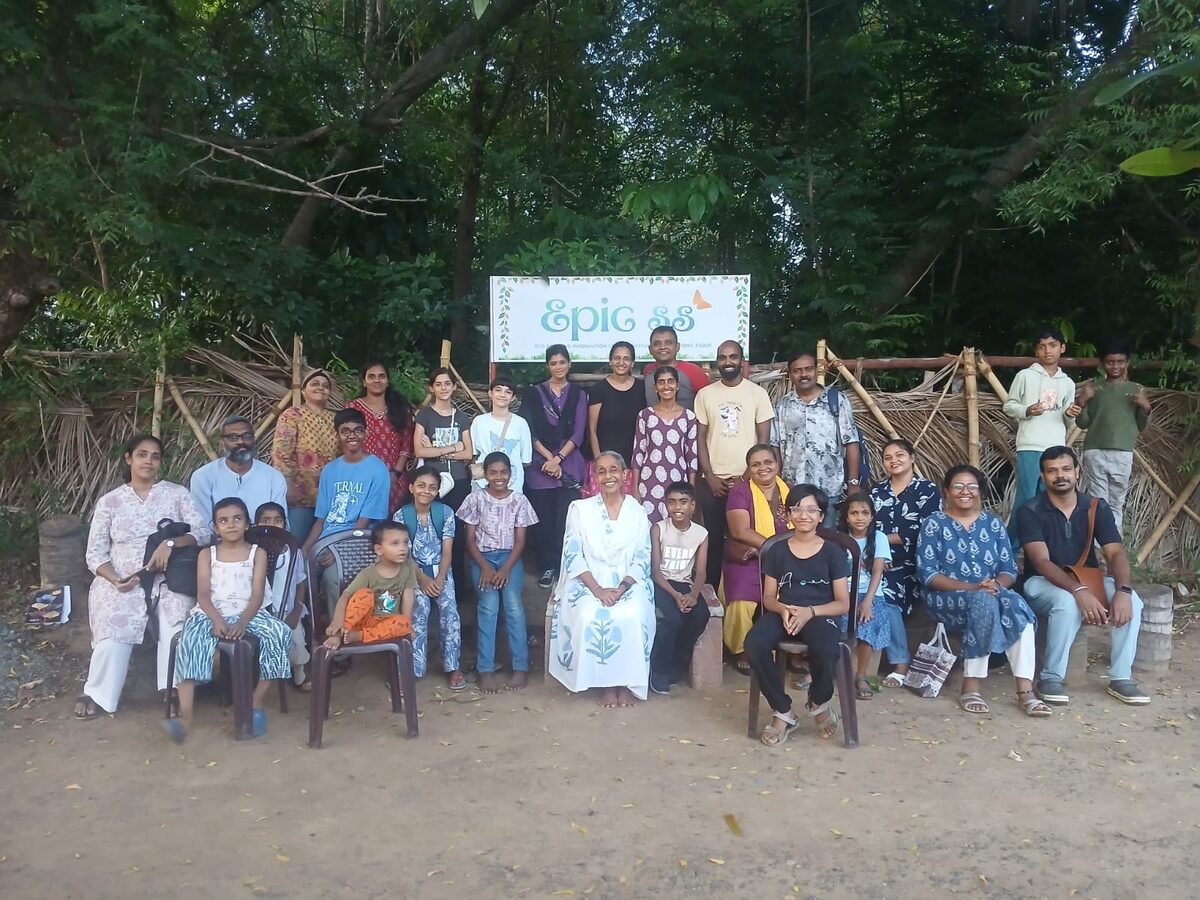
The visit was to start at 2.30. We reached at about 2.15 and found Ms. Santha Sheela Nair, retired IAS officer, already standing outside her campus, waiting for the whole group to arrive. From the word go she had an exact way of delivering her message, on every one of the things that has made EPIC-SS what it is. The specificity and the detail told me something before the content did: nothing on that land is a happenstance or an overlooked occurrence. Everything has a place and a purpose, and she has worked with equal intentionality on the land and on the people around it.
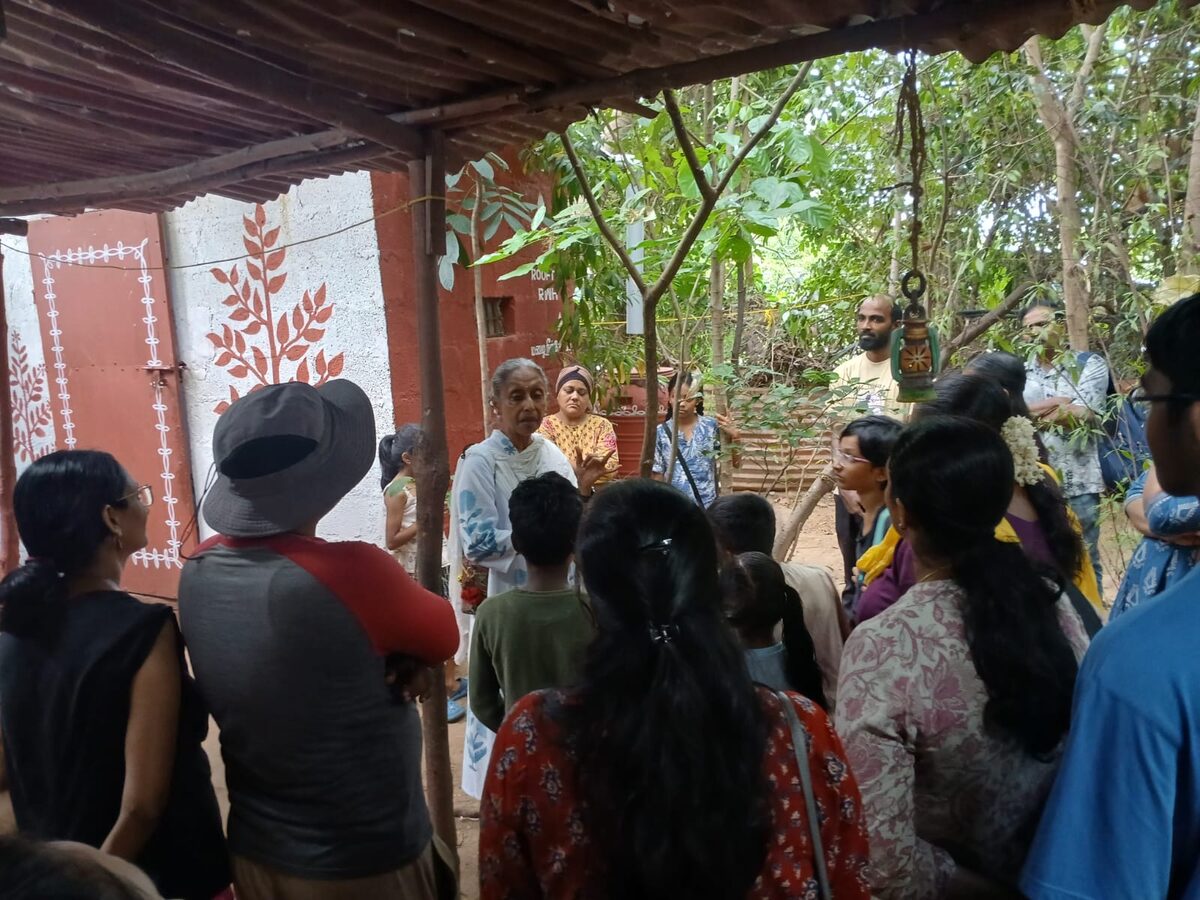
Imagine a house tour, except that this is no ordinary house. Thirty-three cents of unkempt, overgrown plot, part of a larger layout like every other piece of city land, turned into a living, breathing, richly biodiverse ecosystem in which human beings share the space with other living beings rather than displacing them. The first steps were the hardest, and she recounted them for us so that we could grasp the extent of what the place and its people have had to overcome. The land was completely arid. Rainwater was invited in to recharge the groundwater. The soil was rebuilt with mulch and a great deal of physical labour. She grew a small forest by letting the trees compete with one another for sunlight.
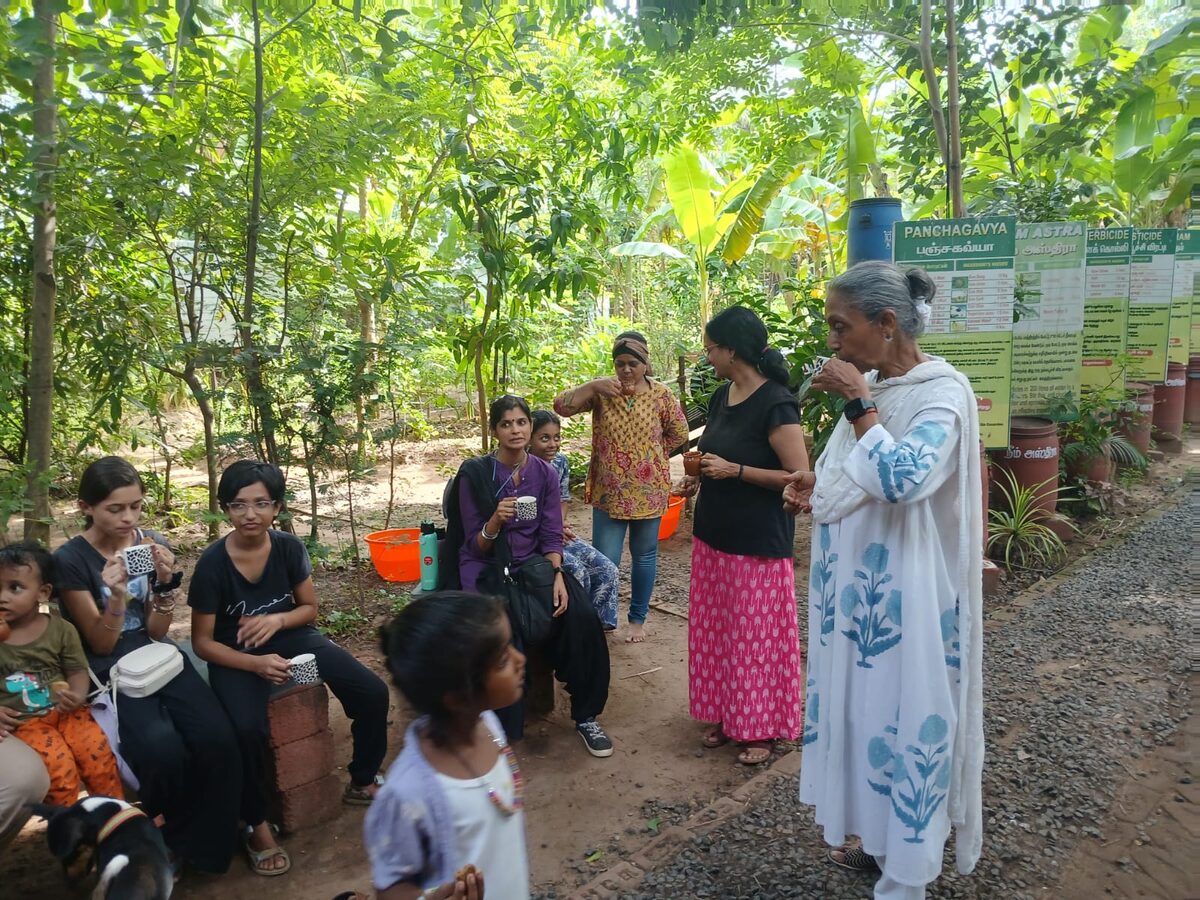
She shows you the kitchen and makes you notice that the gas comes from kitchen waste and water. She flaunts — and flaunt is the right word — a refrigerator made entirely of terracotta that uses no energy at all to keep produce fresh, and keeps it fresh longer. She credits a local villager, whose knowledge came from living with the land rather than from any classroom, for the cheapest rainwater harvesting mechanism on the site. She shows you where her produce comes from, and how she brings bees onto the land and what that has done for everything else growing there. She mentions almost in passing that the Director of IIT Madras visited, and that they traded stories about vetiver and its forgotten glory. Multi-state partnerships to trial new agricultural technology are ordinary business at EPIC. Somewhere in the middle of all this we were given a herbal tea — lemongrass, tulsi, hibiscus and jaggery, with a dash of lemon squeezed in at the very end, every ingredient from that same land — with millet cookies baked in-house by the local akka. You are, in effect, drinking the water system and the kitchen garden and the training programme. There is so much to write about that writing it is exhausting, and if writing about the work is this tiring, I cannot begin to imagine what her days look like in what is supposed to be retirement.
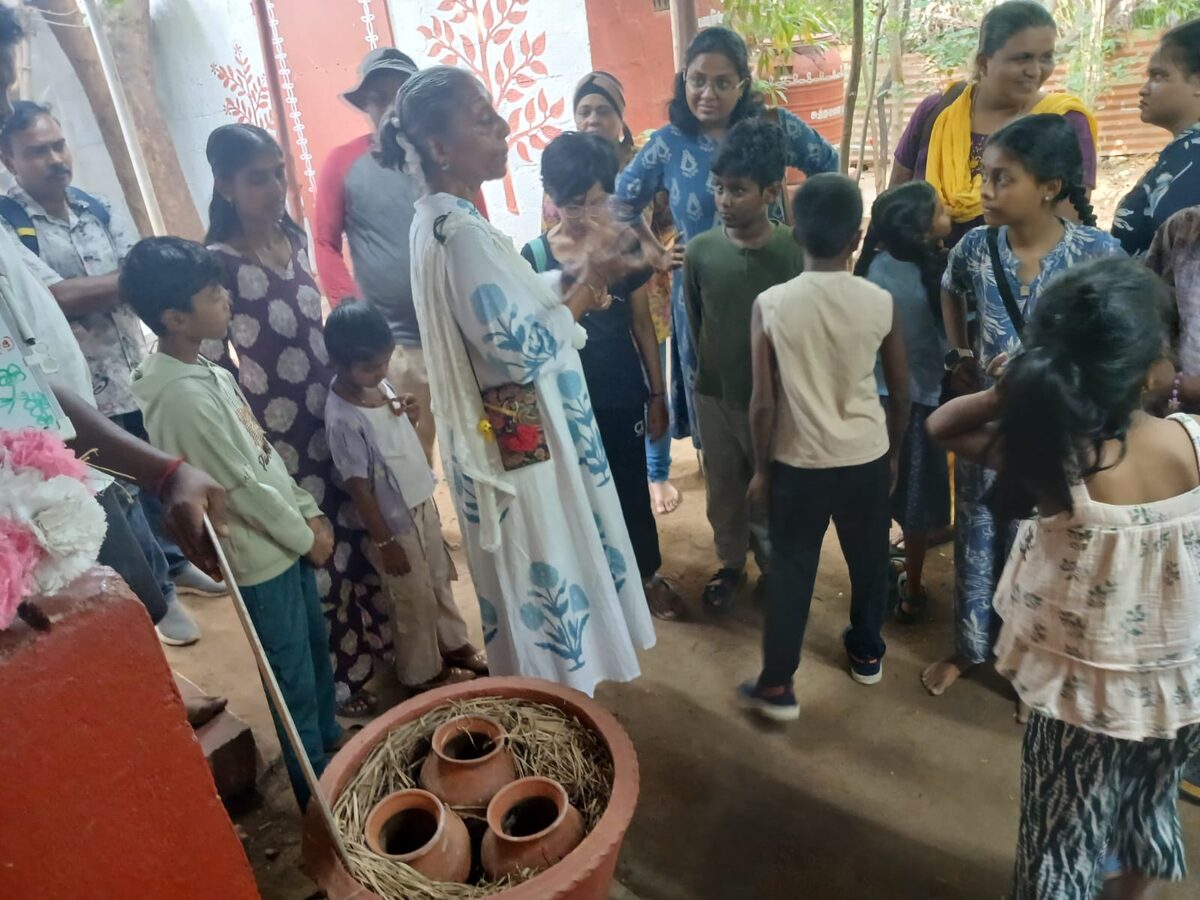
And then there were the stories. The Tsunami. Ocean expeditions. Her work alongside three Chief Ministers and a Prime Minister. It was wonderful to sit and listen to her narrate them — and it made one thing plain. She is not ordinary folk. Which is exactly what makes this so surprising: someone who has worked at that scale has chosen to build this slowly, organically, over a long period of time, with absolute minimalism.
If you are thinking she managed all this because she was an IAS officer, you may want to change your mind. She began after Covid, and she funds the land and its solutions out of her pension. She sleeps in a cottage with no fan, open to a raised thatched roof. She needs no electricity from the grid and in fact supplies her solar excess back to it. She uses a solar dryer, a solar cooker, and hot water running around the clock so that cooking takes less fuel and less time. There is not one stone she has left unturned in living minimally, close to nature and within what the land can carry. It is a genuinely self-reliant farm, and it is the only classroom you need in order to learn what a sustainable life actually involves.
Five things to take with you
There is much more that you will see for yourself when you visit. What I would like to draw your attention to is this.
Set an intention before you go. This matters especially if you are taking children. I would say the intention should be about learning to implement something you have always imagined and never acted on — not about filling a Saturday.
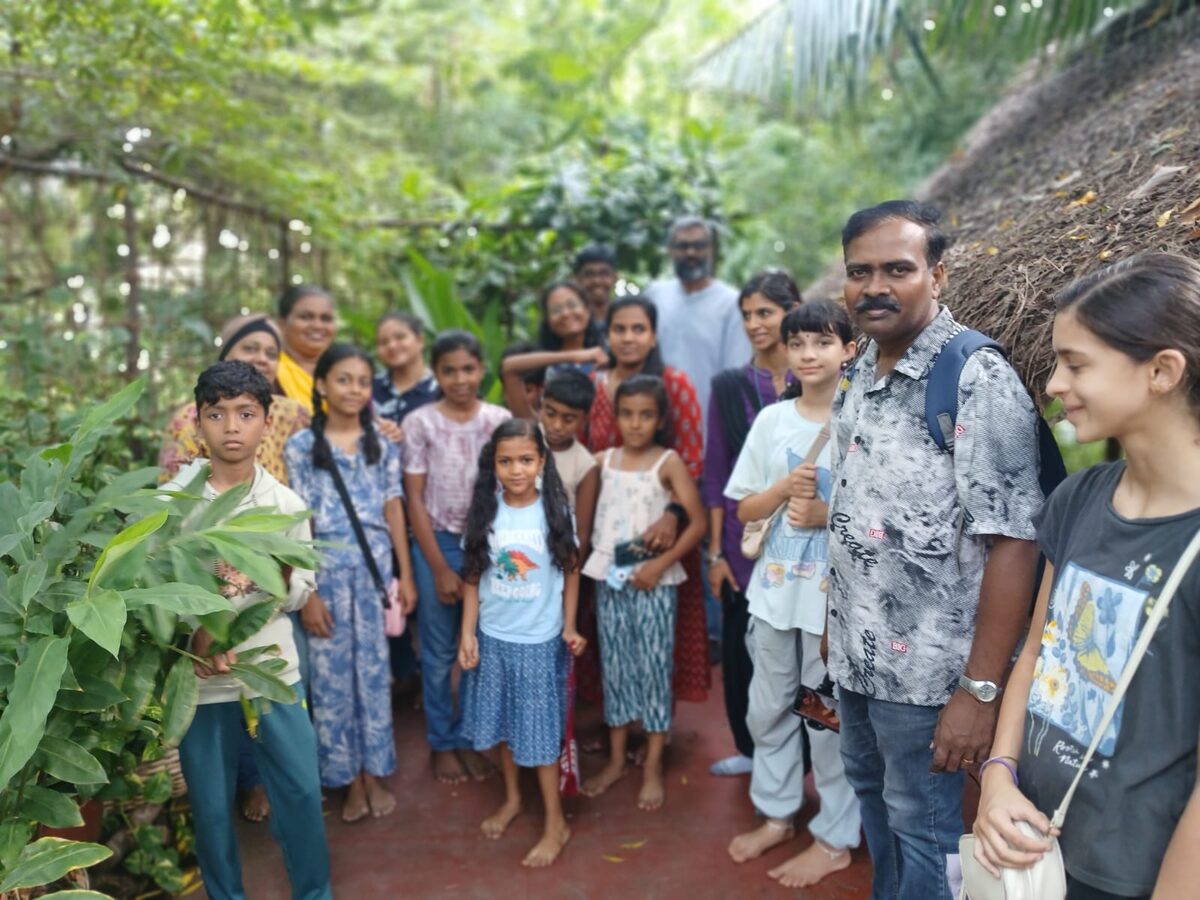
Go with an open mind, real curiosity, and patience. She is about seventy-five, and she was on her feet for all three hours and did not sit down once — energetic, lively, and quicker on the turn than most of us. I sat down to catch my breath at least three or four times. The work is what gives her that stamina, which suggests that if we did the work, we would have the stamina we keep wishing for.
Notice the details. The details are what will give you the energy to start small and keep going incrementally towards something wholesome. She gives away all her trade secrets. Take it all in.
Look out for the surprises. She hoards uncommon things, and what a person hoards tells you where their heart is.
Arrive with questions, and with something to offer back. I have left a few questions at the end if you are not sure where to start.
Why I actually wrote this
I used to dream of becoming an IAS officer when I was young. I wanted to change things around me and do better for everyone. I was dissuaded from it, on the grounds that it was meant for a tough cookie and not a softie like me, and that I would never be able to raise a family alongside it. I know better now. What I do at Inner Companion I do precisely because of that dream — the method is different, the destination is the same.
But this visit showed me something else. I have also wanted, for years, to build a farm and show solutions that others could learn from. I have not done it. And the question that has been following me home ever since is this: what have I actually done with the land I live on? Have I made it better? What is stopping me from getting my hands dirty and growing coriander, chillies, a few creepers, enough to cook something nourishing from my own kitchen?
The answer is loud and clear. Laziness, and a conditioned mind. What can one person do. It is too much effort to get my family on board. What if nobody waters the plants while I am away. None of these had any real basis. I am simply very well trained in producing them. This visit made me see that, and I intend to change it.
I am going to build a surya mandalam garden in our front yard — yes, we have garden space in front of our home, which rather proves the point. We also own a small parcel of land outside Chennai that lies barren. It is labelled arid, with no chance of a water source, which is more or less what EPIC was called before it became what it is. I would like to invite like-hearted people who want to work with land for its own sake, and for the sake of a community, to come and see what we might do together and for one another. If you want to experiment with me, write to me.
In a world where the cry to change how we live is getting louder and more frantic, EPIC-SS comes across as a soulful awakening — the kind that starts from within. I am glad I got to witness it both as a mother and as the founder of a social enterprise. I will keep you posted on what actually changes in how I live over the next few months.
Until then, my deepest gratitude, admiration and love to Santha ma for all the work she has done and continues to do, in seva bhava and in harmony with every living being around her.
Questions to arrive with
Not questions to test her with, but ones that turn a visit into a relationship. Talk them over as a family beforehand and pick the two or three that are really yours.
About your own place
- Which one thing here could we set up at home, at our scale, this year — and would EPIC help us do it?
- What is our water actually doing: where does it come from, where does it go, what happens in between?
- What lives on our street or in our building besides us, and what would we have to change to invite more of it in?
About EPIC’s work
- What do you still need — hands, hours, someone to steward a corner of the land, ideas for what to showcase next?
- How can we contribute to what you are building, not once but over time?
- What could children and young people do here that would be genuinely useful to you, rather than a demonstration arranged for their benefit?
- What would you want a group of homeschooling families to take on together?
About ourselves
- What would I have to give up for this to be true where I live?
- What is already happening in my own neighbourhood that I have stopped noticing?
- Who near me knows something about this place that I have never asked them?
EPIC-SS is at Padur, on the Chennai–Mahabalipuram road. What they do, and how to arrange a visit: epicpadur.in
First in a series of field notes on organisations, spaces and initiatives that hold the community as a textbook. Our thinking on that idea: Let the Community Become the Textbook.