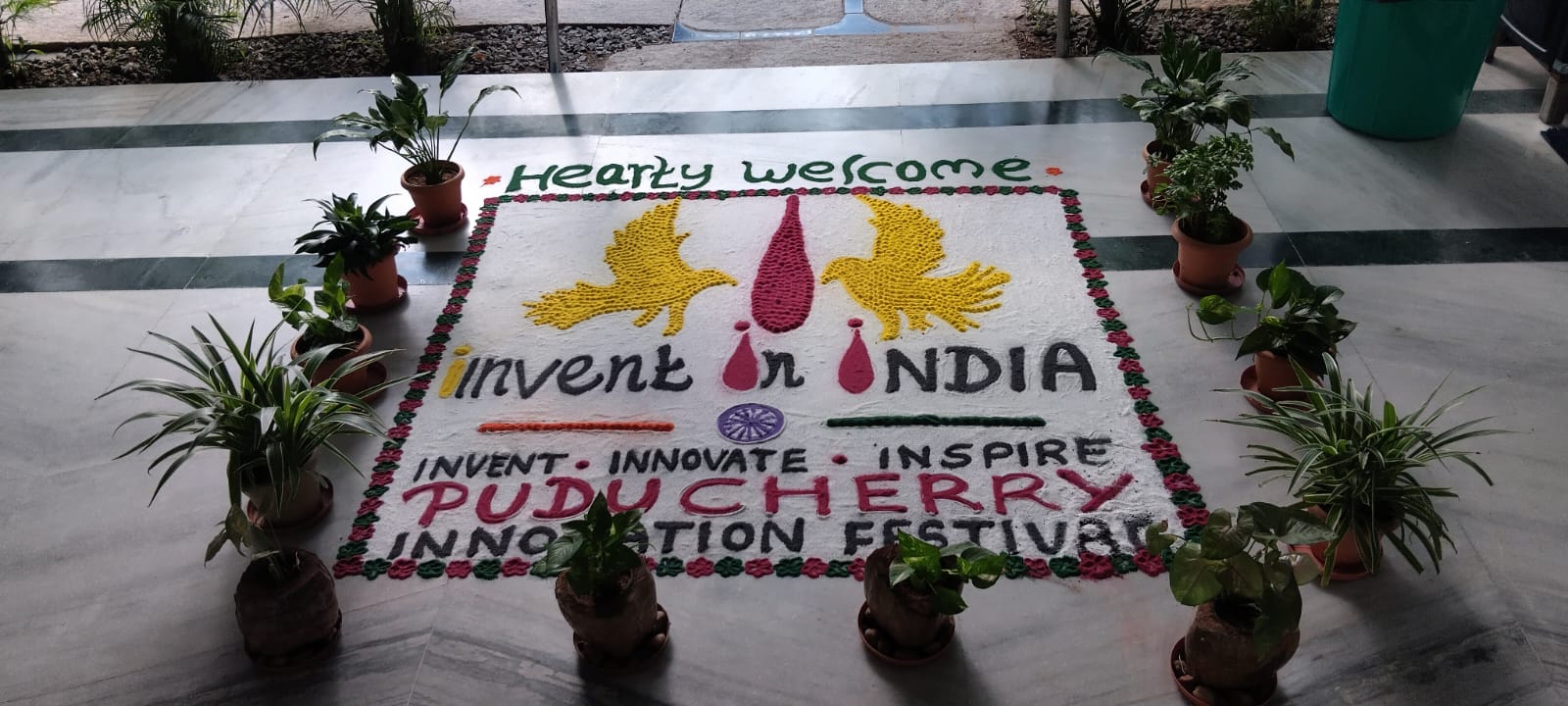
So What? — A Note on Conscious Innovation, After iinventindia
We recently spent time inside iinventindia, and we want to start by saying something plain: it is rare to hear an innovation platform name the word conscious out loud, in a room full of the people building the next wave. Most platforms are content with faster. iinventindia asked for something harder. That single choice of word — and the room it created — is what this note grew out of.
But the more we sat with what we saw and heard there, the less this became about the event, and the more it became about a question we already carry into every room we enter — one we think the wider invention community would do well to sit with too.
The Question After Why
Every innovator has already learned to answer why. It is the first slide of every pitch deck, the question every investor asks before writing a cheque. Why did you build this. Why does it matter. Why you.
But why only accounts for the innovator’s own motive. It rarely reaches the question that actually decides what an invention becomes once it leaves the lab, the studio, or the term sheet:
So what?
So what happens to the people who didn’t ask for this. So what does this cost somewhere else, to someone else, later. So what is genuinely different — for a life, a community, a place — five years after this exists. Is this being built because it bridges a felt need, or because it is a faster route to money alone? Both can be true. But only one of them tends to get asked out loud.
We’ve written before, in Newness and Originality: Why Constant Innovation Feels So Tired, about the difference between newness and originality — between motion and intention, between what hasn’t been done yet and what a moment actually requires. So what is the next layer past originality. A sincerely-intentioned invention can still fail this question, because good motive has never been a guarantee of good outcome. The two questions, held together, are what keep an invention honest as it grows.
Invention as a Birthing
In that same essay we asked, what are you birthing — and meant it mostly as a question about patience: what are you willing to stay with, past the pressure to ship the next version.
Sitting with iinventindia sharpened that metaphor into something more specific. A parent doesn’t hold responsibility for a child until the birth is announced and the applause dies down. They hold it for a lifetime — through what the child becomes, who it affects, what it costs the people around it as it grows into the world. We ask almost nothing equivalent of inventions, or of the people who build them.
This isn’t a new observation. Researchers who study what they call responsible innovation have spent nearly two decades building frameworks around exactly this — the idea that innovators owe an ongoing accountability to the people and systems their work touches, not just a one-time ethical sign-off before launch. And yet, by their own repeated findings, actual evidence of businesses practising this kind of sustained accountability remains thin. The theory exists in far greater supply than the practice.
So the question worth asking plainly is: who is holding inventors and business people accountable once the invention is out in the world — and to whom, exactly, are they answerable? Not to the market alone. The market only tells you what sells, not what it costs elsewhere. This isn’t a fashionable new demand. It’s an old, basic decency that gets forgotten the way most good things eventually do — quietly, and by degrees.
A sub-question sits inside this one. Are we innovating because a problem or a felt need genuinely asked for it — or because novelty itself has become the reward, and because capital right now flows almost exclusively toward entrepreneurial ventures? A great deal of what gets called innovation today is downstream of where the money is pointing, not where the need is. Market-led career paths have made “build a startup” the default answer to “what should I do with my life” for a whole generation of capable people — regardless of whether the thing they end up building was ever the right answer to a real question. That’s not a moral failing in any individual founder. It’s simply how capital and attention move. But it does mean the so what question keeps losing to timing, because the funding decision has to move faster than reflection can.
Sensing Into the Whole
There is one more layer past accountability, and it’s the one we think gets skipped most often: wholeness.
Take a familiar example. You can invent a genuinely good product that cleans a polluted river. It is a real technical achievement, and it will photograph beautifully for a pitch deck. But if the people upstream who are dumping the pollutants never stop, or are never given another way to live and work that doesn’t involve dumping, the invention is treating a symptom while leaving its source fully intact. The river gets cleaner in the stretch where the machine sits. The dumping continues everywhere else.
And such solutions get glorified anyway — often precisely because they offer visible employability to a small, marginal number of people, while the deeper, externalised cost of the underlying environmental degradation goes unmeasured and unmentioned. We think this is worth naming directly: employability is not the same as impact, and a solution that creates a few jobs while a larger harm continues unaddressed is not yet a whole solution. It’s a partial one wearing the language of a whole one.
Which raises the harder question underneath all of this: are we, as a society of innovators, funders, and platforms, actually conscious enough to measure what we’d need to measure — and disciplined enough to enforce it — when so much of what we’ve built our current momentum on depends on not looking too closely? We don’t think that’s a rhetorical question. We think it’s answerable, but only if enough people are willing to sit with it before the building begins, not after.
Before the Trajectory, Not After
This is why we increasingly believe conscious innovation isn’t something to bolt onto an invention once it exists, or a corrective to apply once a founder is already three years into building. By the time momentum takes over, the direction has often already scaled past the point where it can be gently corrected.
The Inner Compass — our five-mindset practice for regenerative leadership — was built for exactly this kind of pause. And increasingly, we think its most valuable place isn’t after an idea has been funded, but before an inventor sets themselves on the trajectory of innovating at all: while the question of why and so what is still cheap to ask, and still has the power to change what gets built in the first place.
That’s the conversation iinventindia gave us the occasion to return to. We’re grateful for the room, and for a platform willing to say conscious out loud in the first place. The rest of this note is for everyone building something right now, whether or not you were in that room with us.
So — what are you building. And so what?
The people in the room
A note like this can make a conference sound abstract. It wasn’t. It was rooms full of particular people building particular things, and some of them stayed with us:
Brij of BIRD — Billion Readers, whose work on Same Language Subtitling and reading discovery we’d admired from a distance. A brief meeting, and already more possible collaboration than we could hold in one conversation — reading is, after all, our home ground too.
Dr Ashok — after which we may well end up signing up for Japanese lessons, and, if the thread holds, visiting Japan in a few years.
Nilima Bhat, with Regenerate Pondy — regeneration spoken in the same register we mean it.
Ashok, representing Sri Aurobindo Andhra Bhavan in Pondicherry.
Lavanya of Soulful Center for Learning — we’re already planning a visit to their Cuddalore campus together with the Chennai Homeschooling Community.
Mahesh Vinayakram, whose music needs no note from us.
Lalit Varma of Aurodhan, Pondicherry.
To each: thank you for the conversation. The agenda that put us all in one place is here.