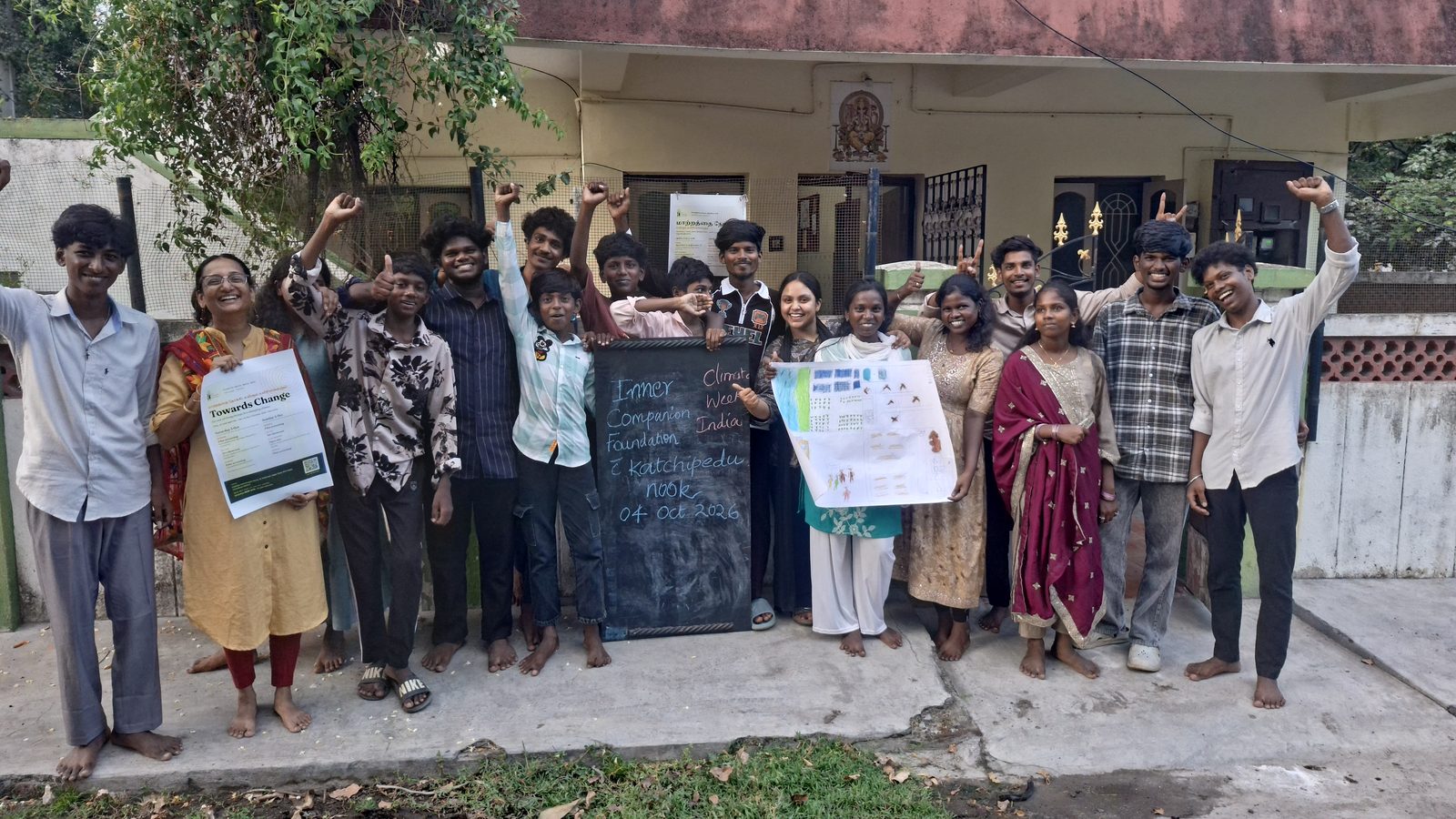
Climate Week India 2026 · Towards Change · 3 and 4 October 2026, Chromepet, Chennai.
October has been a splendid beginning for us. We joined the Climate Week India bandwagon immediately after they announced. Till mid September we could not put together any line up of events. However, with the help of many kind souls, we were able to pull off a meaningful weekend.
We had designed the two-day event around film-screening, discussion, art talk, and open mic. Our focus was to bring people from our neighborhood in order to kickstart local action.
Our first Climate Week India was a memorable and meaningful one. What started off as an attempt to strengthen the local action through mini collaborations and discussions, became a beautiful reunion with some close friends and associates.
The films
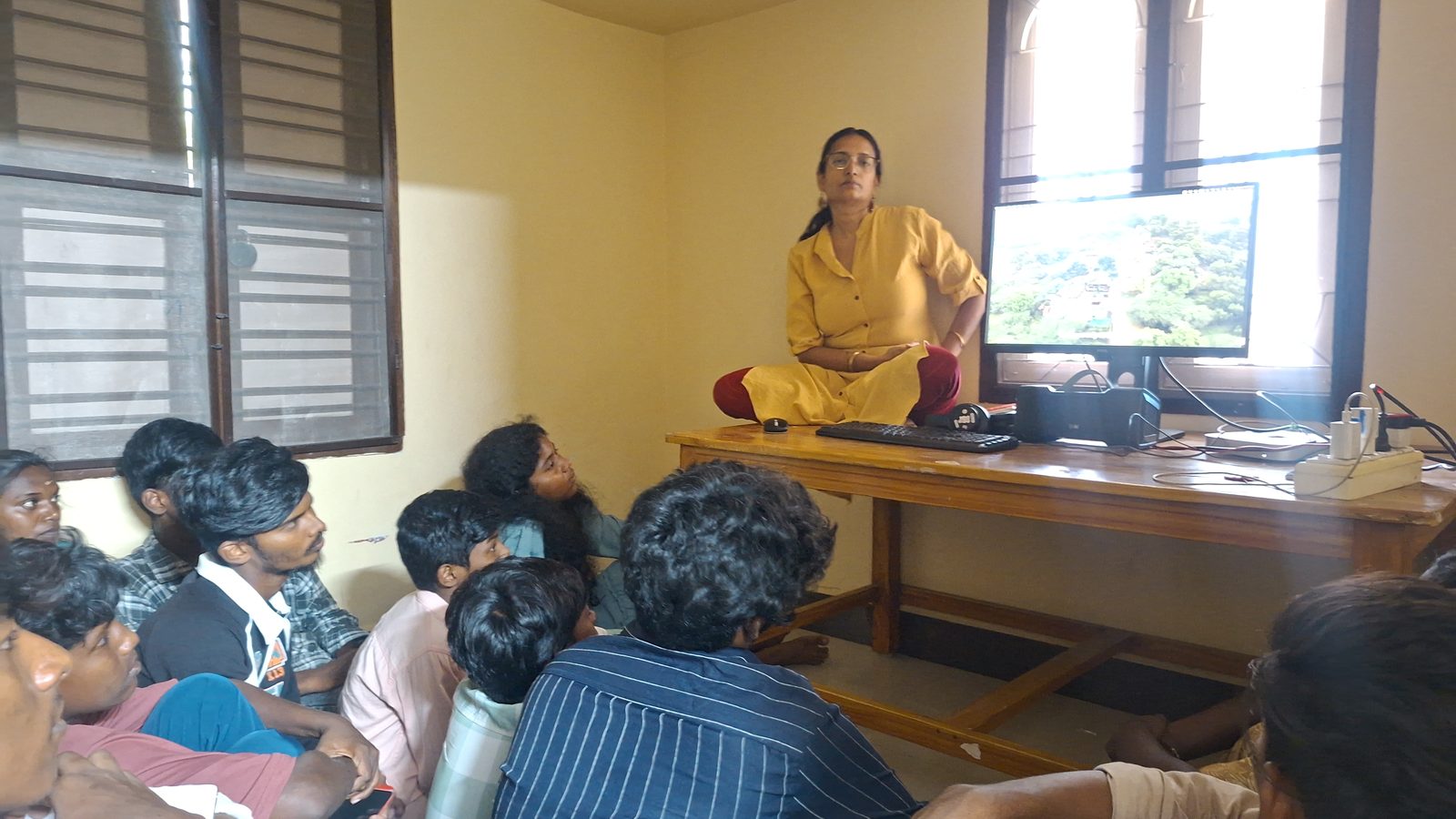
With the help of our friends at Aram Thinai and Madras Naturalist Society, we were able to curate the list of films for our screenings. We reached out to multiple local outlets such as tuition centers, art centers, schools, neighborhood residents’ association. Our friends at Katchipedu Nook also learned about our event and reached out for participation.
We watched 3 documentaries:
- Beneath the Panel, by Aparna Ganesan
- Two documentaries on Mamallan reservoir project, including Nemmeli’s Last Tide, brought out by Suzhal Arivom and Palluyir Trust.
Our experts for the weekend: Care Earth Trust.
The questions
The documentaries surfaced a lot of questions, confusions, and observations amongst us. We shared them in our circles and created art based on those conversations. I think it is worth sharing some of the thoughts and questions from our circle:
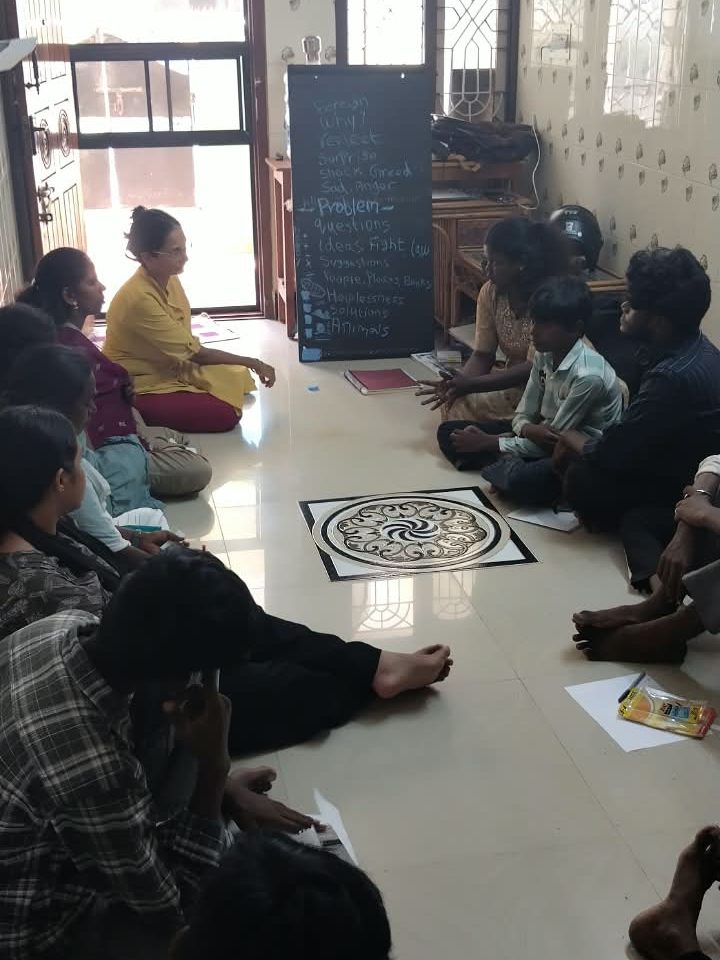
- How could we decide whether a sustainable solution (such as large scale solar panel installation) is right or not? Who decides what is right?
- What are the costs incurred by the local people when such large scale sustainable solutions get implemented? How would they pay for it?
- How would the local community even assess whether these large scale, govt-approved projects would actually benefit them in the longer-term?
- When employment and monetary benefits are promised in exchange for giving up one’s farm land,
- What kind of employment is one being promised?
- How would one determine the terms and conditions that makes this a fair and just compensation?
- Could govt projects lease land and support the farmers/landowners on a continuous basis so they are not driven into poverty due to loss of land and livelihood?
- Why does the public shy away from supporting protests around large scale projects? Is there fear surrounding giving public voice? Fear of what and whom?
- How can one get to know about these issues in the absence of film screenings/documentaries, etc? How can this information be spread more widely so those who want to contribute to it?
There were plenty more. But listing a few to capture the intensity of the questions the documentaries elicited.
What we carry forward
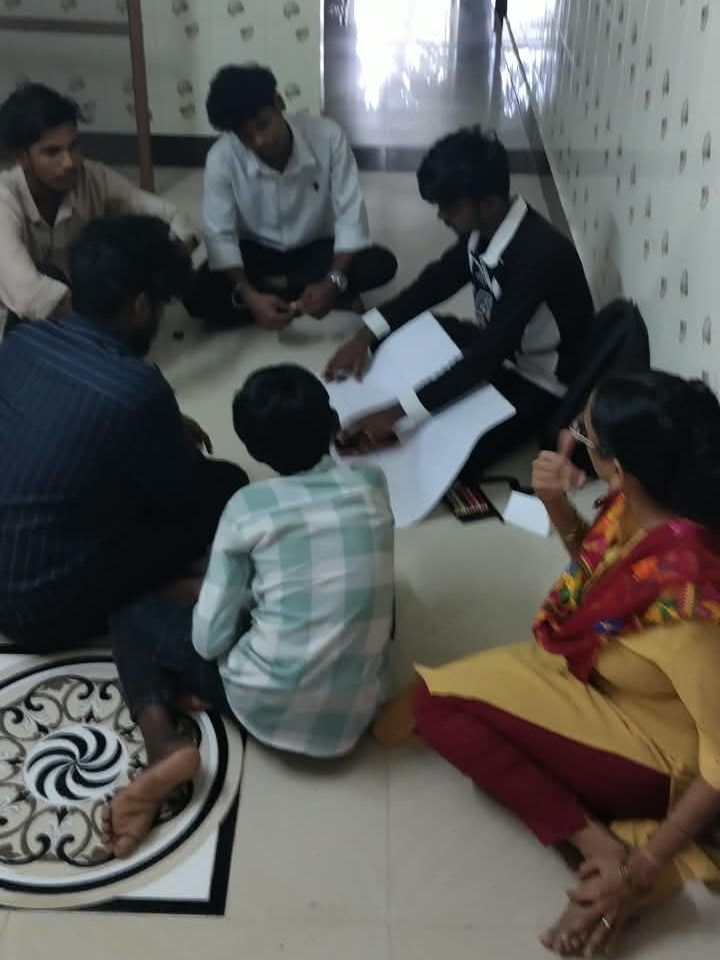
Based on these questions, and further discussions, in smaller groups, we created artwork, skit, to communicate what emerged as next steps. Some of the outcomes we hope to carry on in our everyday lives include
- Paying closer attention to our own backyard and neighborhoods. This could range from understanding how our living environment is changing - new constructions, closing of wells, felling of trees, digging the roads - to stop, notice, ask questions, and understand what the change is about, why it is being done, and what kind of effect will that leave for us. Being curious about the visible changes to our neighborhood environment.
- Documenting the landscape we inhabit - where are the ponds, lakes, and other water bodies in our neighborhood, what about places where the public gathers, plays, and develops a sense of belonging - these are critical questions to engage in. This makes individuals an active citizen and roots people to their places. We have long forgotten what it is to live as a community - and it is in these acts - which appear as poking our nose into things - that helped us become aware of changes around us, and demonstrate that we are not passive recipients of schemes and benefits. That the place is where we belong, and our love for the place is its protection.
- To connect the absence of public places to play, with the growing mental health problems such as loneliness, addiction, suicide, substance usage. Children as young as 12 years understand what drug addiction is and are witness to the effects that drug-use inflicts on people. To reclaim spaces and develop belonging to our neighborhood by showing up for one another.
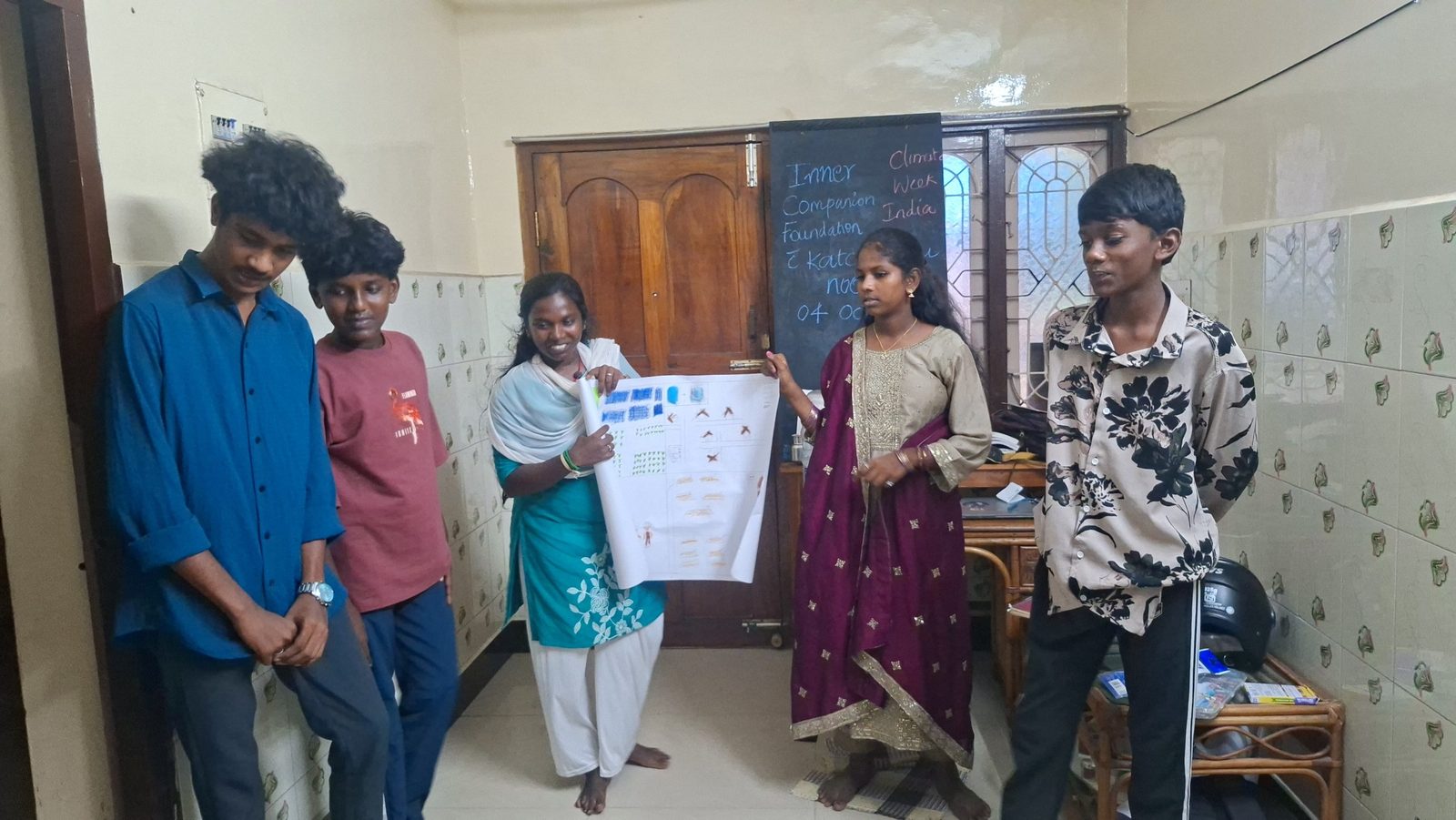
In more ways than one, we realised that navigating climate change is just as much awareness around the science behind it as much as the psychology underneath the human connections.
The take away was to pause and listen to one’s emotions, thoughts, and discomforts; to connect with living beings, human and more than human, to develop empathy and internalise the interconnectedness between life; to question govt schemes when they are proposed and actively following through how it affects the people who inhabit the lands where these solutions are implemented; to prioritize air, water, safety, shelter, over the money-driven ideas of success, growth, fame, and wealth.
This Climate Week left us charged with things to do and develop a resolve to become active contributors to preserving life on Earth.
We will continue to hold these questions beyond Climate Week because it is human lives that is at stake as opposed to the planet. The Earth that has stood the test of million years along with other living beings, will continue to do so; it is the humans who will not be able to sustain the aftermath of our business-as-usual attitude. So let’s come together to protect our own beings; for our own good.
This is not altruism. This is utmost self preservation.